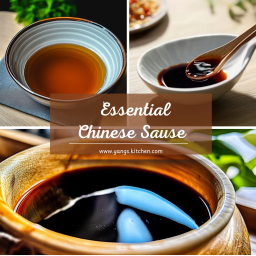
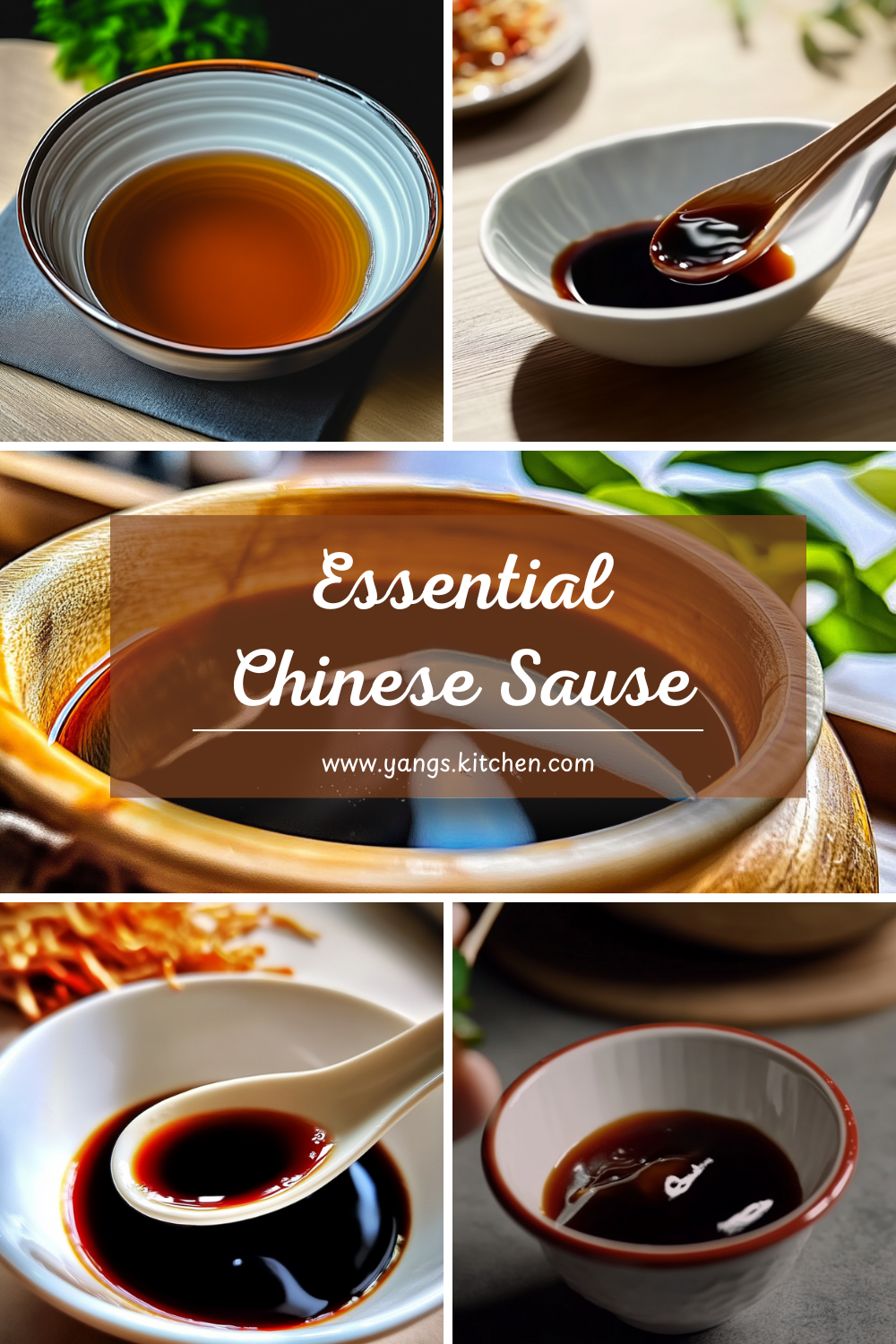
Essential Chinese Sauces for Every Kitchen 常见调味
Common seasonings in Chinese cuisine include various soy sauces, oyster sauce/vegetarian oyster sauce, cooking wine, and vinegar. The sauces listed below, with the exception of vegetarian oyster sauce, can be found in regular supermarkets in Germany.
- Light soy sauce (生抽) is made from high-quality soybeans and wheat, fermented and then extracted. It has a fresh taste and is ideal for stir-frying.
- Dark soy sauce (老抽) is made by further aging light soy sauce for 2-3 months, giving it a deeper color and thicker consistency. It is mainly used for coloring dishes and is not suitable for stir-frying or cold dishes, but it adds a rich flavor to stews.
- Mushroom soy sauce (味极鲜) is based on light soy sauce, with added flavor enhancers like monosodium glutamate and disodium 5′-inosinate. It has an amber color and a savory taste. It is perfect for cold dishes.
- Oyster sauce (蚝油) is made by concentrating the juice from steamed or boiled oysters, or by enzymatically breaking down oyster meat, and then adding other ingredients. It has a brown, viscous texture and a strong umami flavor. It is widely used in Chinese cooking, making it an essential condiment for those who enjoy Chinese cuisine.
- Vegetarian oyster sauce (素食蚝油) replaces oyster sauce with shiitake mushrooms. The essence of the mushrooms blends perfectly with soy sauce, offering a fresh and not greasy taste with a slightly sweet flavor. It is ideal for vegetarians. Vegetarian oyster sauce is available in Asian supermarkets such as Go Asia. For all dishes in this book that call for vegetarian ingredients but include oyster sauce, you can substitute with vegetarian oyster sauce.
- Cooking wine (料酒) refers to a type of wine used in cooking that is brewed from yellow rice wine. It has a low alcohol content (below 15%) and is rich in esters and amino acids. It is widely used in cooking to remove unpleasant odors and enhance flavor.
- Vinegar (陈醋) typically contains 4%-7% acetic acid, with small amounts of tartaric acid and citric acid. In theory, almost any liquid containing sugar can be fermented into vinegar. In Eastern countries, vinegar is made from grains like rice, wheat, or corn, while in Western countries, vinegar is made from fruits or wine. Vinegar plays an important role in Chinese cooking, particularly for stir-fried vegetables or cold dishes. It is generally dark brown, opaque, and has a rich, bold taste.
Recipe by Yang’s Kitchen
 Yang's Kitchen
One response to “Essential Chinese Sauces for Every Kitchen”
[…] Need more information about the sauces? see here. […]
LikeLike